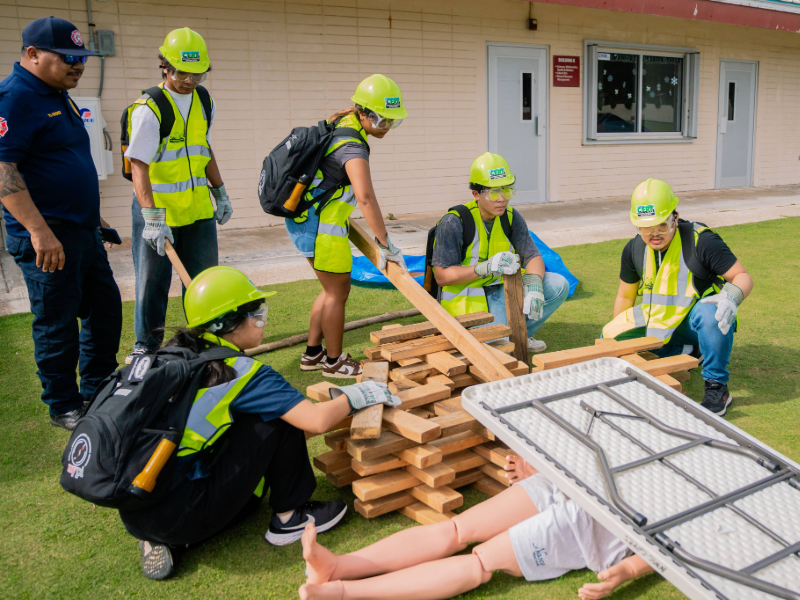
Northern Marianas College’s Cooperative Research, Extension, and Education Services- Family, Community, and Youth Development Program, in partnership with the Department of Fire and Emergency Medical Services and CNMI Homeland Security Emergency Management, successfully delivered a series of disaster preparedness and response trainings across the CNMI.
Two-day Disaster Response Advanced First Aid trainings were conducted on Rota and Tinian, while Saipan hosted a week-long program featuring Community Emergency Response Team and CPR certification. Through these efforts, 34 community members across the islands strengthened their capacity to respond effectively during disaster-related emergencies: 12 were certified in Saipan, 15 in Tinian, and seven in Rota.
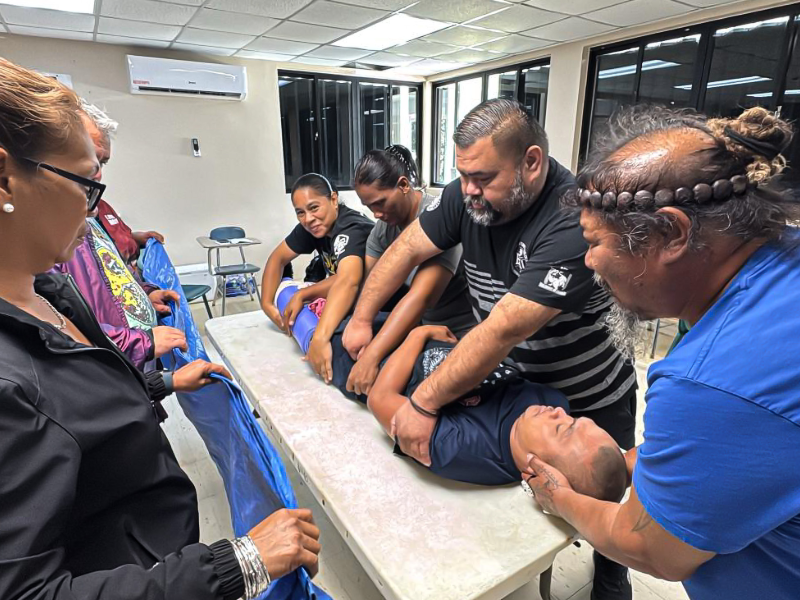
Learning by doing: Rota participants practice with their instructor by executing a half log roll, a method of comfortably maneuvering injured patients in an emergency medical situation.
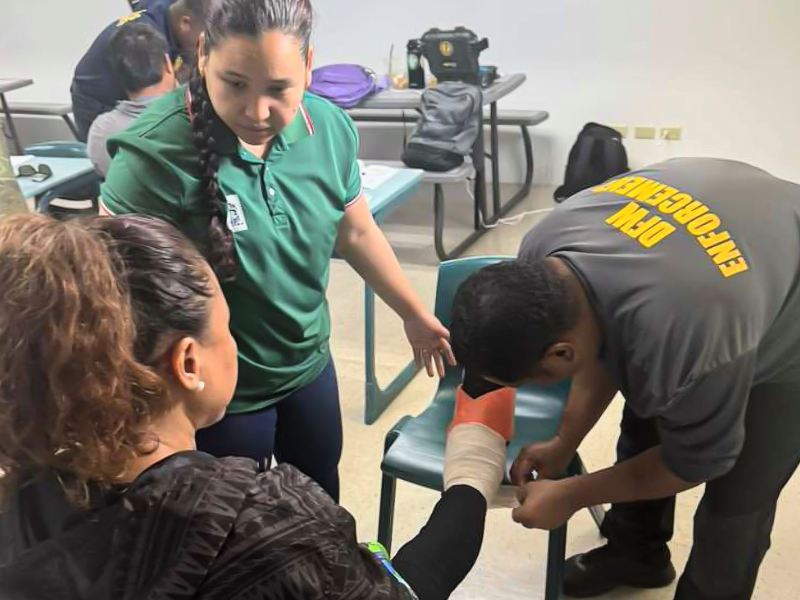
Tinian DRAFA participants learn to stabilize and splint a leg injury.
Participants gained hands-on, practical experience in disaster assessment and emergency medical response by engaging in realistic, scenario-based training. Instruction included patient stabilization, cardiopulmonary resuscitation, and light search-and-rescue techniques, ensuring participants are better prepared to protect lives and support their communities when disasters strike.
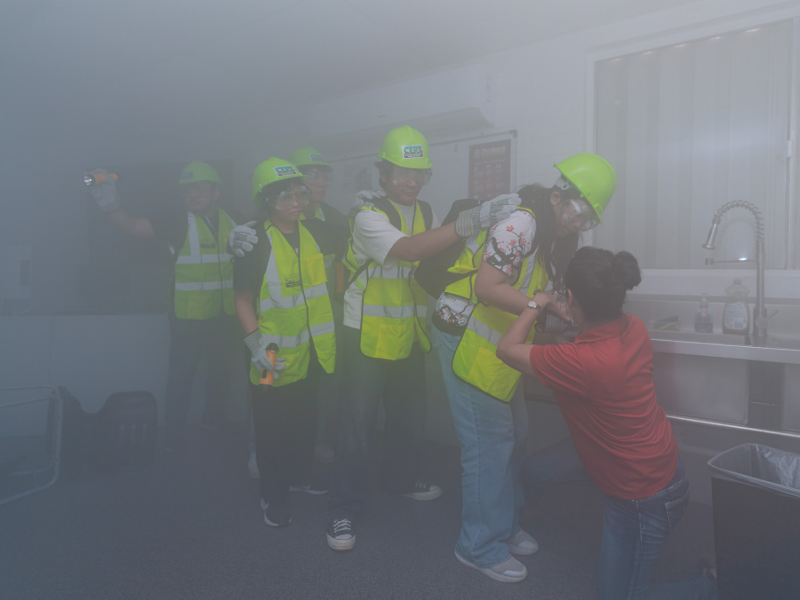
Staying calm and collected in disaster situations: DRAFA participants were put to the test in a hands-on simulation of search and rescue in Saipan.
Participants attended the immersive training, building assurance in having the capacity to perform the appropriate response measures should there be a natural disaster or emergency.
Participants expressed their gratitude in enhancing their disaster response skills.
Stephanie Gruy of Saipan shared, “My biggest takeaway was realizing that ‘overthinking’ is actually a strength; in a disaster, imagining unpleasant scenarios is what allows you to plan for things to go right. As a parent, I’ve learned that a little paranoia is proactive, because identifying how my home is unsafe — like checking exits or hazards — is the first step toward fixing them. This training proved that moving with caution and a plan is far better than rushing unprepared and becoming a victim yourself.”
Chad Ellie Borja Palacios of Tinian stated, “Attending the training was an eye-opener and I’m grateful for the skills and confidence it gave me to respond to emergencies. The hands-on approach and expert guidance made a huge difference in my ability to stay calm and provide effective care.”
Robert Myers of Rota said, “I took this training because during a disaster, help is often needed before medical professionals arrive. The training teaches regular people how to stay calm, assess a situation, and provide basic help to victims when every minute counts. It is not easy, but it is practical and realistic. I believe anyone who is responsible for others — whether at work, in the community, or at home — should take this training.”
“We appreciate DFEMS and HSEM working with our CREES Family, Community, and Youth Development Program in the spirit of collaboration to increase the CNMI’s readiness to respond to disasters and emergencies,” stated Dean Patty Coleman of NMC-CREES.
For more information about the Disaster Preparedness and Response Training program, contact NMC-CREES state program leader Tayna C. Belyeu-Camacho at This email address is being protected from spambots. You need JavaScript enabled to view it. or (670) 237-6841.